Small homes can live big when you choreograph what the eye sees. Harnessing perception, light, color, and layout lets you transform tight rooms into calm, generous-feeling retreats. This in-depth guide unwraps the art and science behind Visual tricks to enlarge small interiors, giving you practical steps you can apply today—no renovation required.
What Are Visual Space Illusions—and Why They Work
Design is a language the brain reads at a glance. We instinctively respond to brightness, contrast, pattern, lines, and edges. When you coordinate these cues, you create a convincing impression of depth and width. In other words, Visual tricks to enlarge small interiors are perceptual strategies that nudge our eyes to interpret a compact envelope as open and airy. They’re grounded in psychology and optics, not magic—and that’s exactly why they’re reliable.
Key Perception Principles
- Negative space: Empty areas around objects give the eye somewhere to rest and make rooms feel calmer and bigger.
- Visual weight: Dark, bulky items feel heavier; light, leggy pieces feel lighter. Managing weight distribution changes how roomy a space seems.
- Continuity: Unbroken lines and surfaces guide the eye farther, creating a sense of flow.
- Scale and proportion: Furniture that suits the room’s size reads intentional and spacious; oversized or tiny pieces distort balance.
- Perspective: Converging lines (like floorboards) and receding planes amplify depth when oriented wisely.
Light: The Fastest Way to Expand Any Room
Light is square footage you can’t measure with a tape. It dissolves boundaries and clarifies edges. Any plan built on Visual tricks to enlarge small interiors should start with a lighting audit: amplify natural light, then layer artificial lighting to erase pockets of gloom.
Maximize Natural Light
- Keep glass clear: Use sheer curtains or leave windows bare where privacy allows. Clean panes, sills, and frames—dust dulls brightness.
- Trim obstructions: Outdoors, prune shrubs that block daylight. Indoors, swap bulky window treatments for slim hardware and airy fabrics.
- Reflect and ricochet: Place mirrors opposite or adjacent to windows to bounce light deeper into the room. Mirrors are cornerstone tools in Visual tricks to enlarge small interiors.
Layer Artificial Lighting
Relying on one ceiling fixture collapses space into a glare pool with dark corners. Instead, design a three-part scheme:
- Ambient: Even, room-wide glow. Think dimmable ceiling fixtures, cove lighting, or wall washes.
- Task: Focused beams at work zones—reading lamps, under-cabinet strips, vanity sconces.
- Accent: Eye-leading highlights—picture lights, shelf LEDs, spotlights on plants or textures. These act as refined Visual tricks to enlarge small interiors by drawing gaze through the space.
Color and Finishes: Paint with Light
Color affects perceived scale as much as it affects mood. High Light Reflectance Value (LRV) hues bounce illumination; low-LRV shades absorb it. Used strategically, palettes become powerful Visual tricks to enlarge small interiors because they smooth transitions between surfaces and minimize visual stops.
Monochrome and Near-Monochrome Palettes
Choosing one hue and varying its tints and textures creates continuity. For example, soft gray walls, a paler gray rug, and slightly darker drapery reduce contrast and stretch sightlines. Monochrome schemes are reliable Visual tricks to enlarge small interiors because your eye doesn’t keep bumping into abrupt shifts.
Ceilings, Trim, and Door Color
- Lift the lid: Paint ceilings the same color as the walls or one step lighter to blur the corner line and make the room feel taller.
- Unify trim: Matching baseboards and casings to wall color erases outlines that visually chop the perimeter.
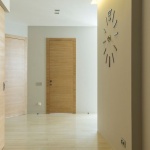
- Blend doors: Painting interior doors and frames to match walls lets them recede; continuity is one of the most efficient Visual tricks to enlarge small interiors.
Finish Sheen and Texture
- Subtle sheen: Eggshell or satin on walls returns gentle light; high-gloss on select accents (not entire walls) adds sparkle without glare.
- Soft textures: Linen, boucle, and matte ceramics absorb just enough light to feel cozy but not heavy.
- Glass and mirror: Reflective accents double perceived depth—very effective Visual tricks to enlarge small interiors when used sparingly.
Lines, Patterns, and Geometry: Direct the Eye
Where the eye travels, the room expands. Patterns and lines function like arrows, and as deliberate Visual tricks to enlarge small interiors they can lengthen, widen, or heighten a space without moving a single wall.
Verticals for Height, Horizontals for Width
- Vertical stripes on wallpaper, paneling, or curtains make ceilings read higher.
- Horizontal lines across wainscoting, low shelving, or long art arrangements broaden narrow rooms.
- Diagonal patterns on rugs or herringbone floors pull the gaze across corners, enriching depth.
Large-Scale Patterns
Counterintuitive but true: tiny motifs create visual noise. A bigger repeat feels calmer and less cluttered, an understated but potent member of your toolkit of Visual tricks to enlarge small interiors.
Flooring Continuity
- One floor, many zones: Running the same wood, tile, or LVP across adjoining rooms erases thresholds that make spaces seem smaller—one of the most reliable Visual tricks to enlarge small interiors.
- Plank direction: Lay boards the long way to elongate; in tiny apartments, align with natural sightlines.
- Large-format tiles: Fewer grout lines equal fewer visual breaks; choose narrow grout in a close color.
Furniture Strategy: Scale, Air, and Flexibility
Furniture can either swallow a room or free it. Calibrating scale and silhouette often delivers more payoff than removing pieces. The smartest Visual tricks to enlarge small interiors balance comfort with optical lightness.
Pick the Right Scale and Proportion
- Goldilocks sizing: Avoid both extremes. Petite furniture can make a room feel like a dollhouse; one thoughtfully scaled sofa plus a compact lounge chair often beats multiple tinier seats.
- Low profiles: Lower backs keep sightlines open under windows and art, extending the room upward.
Choose Airy Silhouettes
- Leggy pieces: Sofas and chairs on visible legs show more floor—instant spaciousness.
- Glass or acrylic: See-through coffee tables and consoles are unobtrusive anchors and subtle Visual tricks to enlarge small interiors.
- Floating furniture: Wall-mounted vanities, nightstands, and media units expose floor area, lowering visual weight.
Multi-Functional and Storage-Rich
- Ottomans with storage replace bulky coffee tables and hide throws, toys, or gear.
- Extendable dining tables flex for guests without dominating daily life.
- Murphy beds and sleeper sofas turn a living room into a guest suite—practical design that supports the best Visual tricks to enlarge small interiors.
Layout and Traffic Flow
- Float your sofa: Pull it off the wall by a few inches to suggest depth.
- Clear pathways: Leave 30–36 inches for walkways. Unobstructed routes are powerful Visual tricks to enlarge small interiors because they reduce visual friction.
- Group and layer: A rug defines the conversation zone; nesting tables add function without bulk.
Surfaces and Storage: Hide, Streamline, Reveal
Clutter is a space killer. Surfaces that conceal, and shelves that display with intention, are foundational Visual tricks to enlarge small interiors. The goal: fewer items, clearer lines, and coherent shapes.
Built-Ins and Tall Storage
- Ceiling-height cabinetry: Draw the eye up and pack away visual noise.
- Shallow depth, wide span: Slim cabinets along a wall maintain floor area while adding massive capacity.
Doors and Partitions
- Glass doors: French or ribbed-glass panels transmit light yet preserve privacy—an elegant take on Visual tricks to enlarge small interiors.
- Sliding over swinging: Barn or pocket doors save clearance, protecting flow.
Open Shelving, Styled Smart
- Curate: Keep 30–40% breathing room; group by color and height for harmony.
- Closed below, open above: Lower cabinets hide clutter; upper shelves keep the room light.
Decluttering Rituals
Adopt a one-in-one-out rule and a monthly 15-minute reset. habitual tidiness is among the most affordable Visual tricks to enlarge small interiors because it constantly restores negative space.
Window Treatments: Frame the View, Borrow the Outdoors
Windows are your largest light sources and natural artwork. Done right, drapery doubles as one of the easiest Visual tricks to enlarge small interiors, emphasizing height and breadth with a few hardware choices.
Hang High and Wide
- Mount near the ceiling: Extending the rod 6–12 inches beyond the window and as high as possible makes windows look larger.
- Full-length panels: Puddling lightly or just kissing the floor adds elegance without clutter.
Blinds and Shades
- Sheer roller shades: Preserve light while softening glare.
- Top-down/bottom-up: Control privacy and sky views—versatile, space-smart, and compatible with Visual tricks to enlarge small interiors.
Mirrors and Reflections: Double the Depth
Mirrors stretch horizons. Use them to reflect windows, lamps, or long axes of the room. Thoughtful positioning is among the most impactful Visual tricks to enlarge small interiors available to any budget.
Placement Tips
- Opposite windows: Bounce daylight across the room to brighten shadowy corners.
- Across from focal points: Duplicate a favorite artwork or plant to make vignettes feel fuller.
- Hallways: A vertical mirror elongates and improves wayfinding.
Practical Safety
- Anchor securely: Use proper wall anchors and consider safety film in homes with kids or pets.
- Avoid glare traps: Test positions at different times of day to prevent harsh reflections.
Zoning Studio and Open-Plan Spaces
Small doesn’t mean shapeless. Define zones using low partitions, rugs, and light—these are sophisticated Visual tricks to enlarge small interiors that make studios feel organized and calm.
Smart Zone Markers
- Area rugs: Anchor seating or sleeping areas without building walls.
- Lighting islands: Pendant over table, floor lamp by sofa, sconce by bed—each pool of light signals function.
- Color blocking: A single accent wall or tonal shift separates a workspace while preserving openness.
Room-by-Room Strategies
Living Room
Start with a right-sized sofa on legs, a glass coffee table, and layered lighting. Keep tall bookcases to the room’s perimeter, and float furniture slightly from the walls. For renters, removable wallpaper in a soft pattern is one of the friendliest Visual tricks to enlarge small interiors.
Small Bedroom
Mount sconces instead of nightstand lamps to clear surfaces. Choose a headboard with vertical channels to add implied height. Under-bed drawers corral clutter. A narrow console at the foot of the bed can substitute for a dresser—tactical and aligned with Visual tricks to enlarge small interiors.
Kitchen
- Light uppers, darker lowers: Lift the visual ceiling while grounding the base.
- Glass-front cabinets or open shelves near windows distribute light.
- Under-cabinet lighting eliminates shadows that shrink counters.
Bathroom
Choose a floating vanity and a frameless shower screen to reveal more floor and wall tile. Large-format tile with minimal grout, a backlit mirror, and a single-tone palette tick multiple boxes for Visual tricks to enlarge small interiors.
Entryway
Install a slim console with drawers, a wall mirror, and overhead plus sconce lighting. A vertical coat rack or trio of pegs adds function without mass. This trio is a quiet powerhouse within the family of Visual tricks to enlarge small interiors.
Common Mistakes That Shrink Space
- Too much furniture: Even beautiful pieces can overwhelm; edit relentlessly.
- Heavy drapery: Thick, dark curtains block light and shorten walls.
- Rugs too small: A postage-stamp rug makes the room look fragmented. Size up so front legs of seating rest on the rug.
- Patchwork flooring: Multiple finishes across small areas chop flow.
- Over-accessorizing: Many small objects read as clutter; opt for fewer, larger accents.
Budget-Friendly Wins
- Paint: High-LRV neutrals transform light levels for minimal cost.
- Mirrors and lamps: Thrift-store finds + new shades equal instant depth.
- Furniture legs: Swap out skirted pieces for leggy alternatives where possible.
- Declutter marathons: Zero cost, high return—core to all Visual tricks to enlarge small interiors.
Advanced Pro Tips
- Wall-washing LEDs: Concealed strips at the ceiling push brightness down walls for a gallery-like feel.
- Color drenching: Painting walls, trim, and doors the same hue erases edges and reads luxe.
- Ceiling treatments: Subtle striped paint or slender beams to draw the eye upward.
- Partial glass partitions: 50–70% glass maintains sound control while preserving light—architectural-level Visual tricks to enlarge small interiors.
A 7-Day Mini Makeover Plan
- Day 1—Declutter: Edit surfaces, donate duplicates, clear floors and tabletops.
- Day 2—Light audit: Replace bulbs with warm LEDs, add a task lamp, reposition shades.
- Day 3—Paint tune-up: Touch up walls and consider painting trim to match walls.
- Day 4—Mirror magic: Hang one large mirror to reflect a window or longest axis.
- Day 5—Furniture reset: Float sofa slightly, widen walkways, remove one extra piece.
- Day 6—Window refresh: Raise rods, widen panels, switch to sheers or lighter fabrics.
- Day 7—Style and layer: Add a larger rug, group decor in threes, introduce greenery to draw the eye upward.
FAQ: Quick Clarity for Big Results
Do dark colors always make rooms feel smaller?
No. Deep hues can recede and create enveloping depth when used consistently with ample lighting. The key is minimizing high-contrast breaks and supporting them with other Visual tricks to enlarge small interiors like layered lighting and reflective accents.
Is minimalism required?
Not at all. Edit for clarity, not austerity. Maximalist style can thrive if you manage scale, repetition, and negative space while employing selective Visual tricks to enlarge small interiors.
Can a big sofa ever work in a tiny living room?
Yes—a single, well-proportioned sofa with a light silhouette often feels calmer than multiple small chairs. Pair it with a glass table and tall lamps to complete the suite of Visual tricks to enlarge small interiors.
Putting It All Together
Design that feels expansive is more choreography than shopping list. Start with light, choose a cohesive palette, favor continuous lines, right-size your furniture, and guard negative space. These coordinated moves are the most dependable Visual tricks to enlarge small interiors—and they’ll help your compact rooms live larger, look calmer, and function better every day.