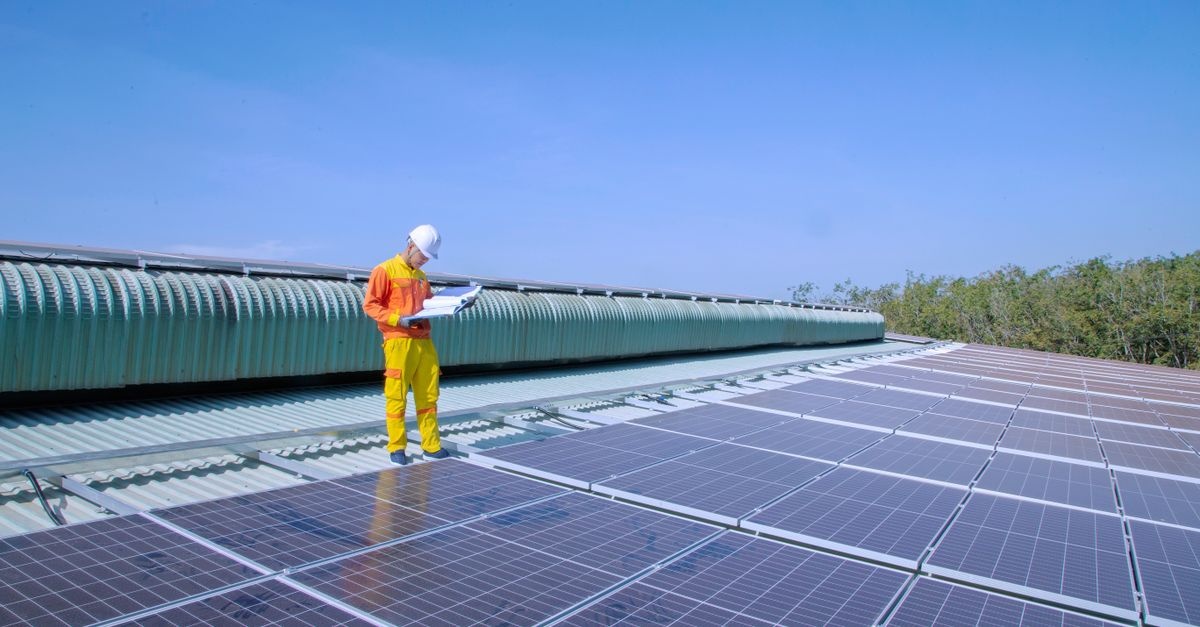
The 2026 reform of photovoltaic settlement rules is reshaping how solar owners are paid for exported energy and charged for power drawn from the grid. While the exact framework varies by country and utility, a broad global trend is unmistakable: a decisive move from simple one-for-one crediting toward dynamic net billing, time‑of‑use pricing, and data‑driven compensation. If you’ve been asking yourself “New photovoltaic settlement rules for 2026–what changed and how do I adapt?”—you’re in the right place. This deep‑dive explains the new mechanisms in plain language and gives you a step‑by‑step playbook to protect, and even grow, your solar savings.
The 2026 Shake‑Up at a Glance
Across many jurisdictions, 2026 brings structural changes that reflect the maturing solar market and the need for grid flexibility. In practice, this means your solar economics will rely more on self‑consumption, load shifting, and smart automation than ever before. Here’s a snapshot of what’s different:
- From net metering to net billing: Instead of offsetting imports and exports at the same retail rate, energy you export is typically valued at a separate, often lower, export price or buy‑back rate.
- Time‑of‑use (TOU) takes center stage: Both import tariffs and export compensation are more time‑sensitive, with peak/off‑peak and even dynamic hourly pricing in some markets.
- More granular settlement windows: Monthly or even sub‑hourly netting replaces generous annual netting, reducing the value of seasonal overproduction.
- New charges and credits: Expect capacity charges, grid access fees, balancing costs, or ancillary‑service incentives to appear or change.
- Smart meters are mandatory: Near real‑time data enables dynamic tariffs, flexible export rates, and performance‑based incentives.
- Storage and flexibility rewarded: Batteries, EVs, heat pumps, and demand response earn more value by aligning with price signals or aggregator programs (e.g., virtual power plants).
- Community and shared solar evolve: Energy‑community members may see refined rules for virtual netting, transfer pricing, and governance.
New photovoltaic settlement rules for 2026–what changed
The phrase “New photovoltaic settlement rules for 2026–what changed” covers a spectrum of policy moves that increasingly converge on a few core design principles: reflect system value, encourage local consumption, and price grid services fairly. Below we break down the essential shifts and what they mean for prosumers.
1) Net Metering vs. Net Billing: A Structural Pivot
Under traditional net metering, each kilowatt‑hour (kWh) you exported could offset a kWh you imported at retail prices, often with annual carry‑over. In 2026, many regions have either replaced or limited net metering in favor of net billing (or buy‑all, sell‑all variants). With net billing, exports are credited at a distinct export compensation rate (e.g., tied to wholesale or a feed‑in tariff), while your consumption is billed at the retail rate. The result: your savings now depend more on self‑consumption rate than sheer production.
2) Export Price Formation: From Fixed to Dynamic
Export prices used to be simple—often a fixed feed‑in tariff or an administratively set value. In 2026, expect more nuanced mechanisms:
- Time‑of‑Use export rates: Higher buy‑back at peak evening hours, lower at midday when solar is abundant.
- Dynamic hourly prices: Export compensation may track day‑ahead or real‑time wholesale markets, minus a balancing or profile cost.
- Seasonal multipliers: Winter scarcity can boost export value; summer oversupply can depress it.
- Caps and floors: Some programs guard against extreme volatility with minimums/maximums.
- Performance adders: Premiums for dispatchability (e.g., battery‑enabled exports on demand) or grid‑support services.
3) Charges, Fees, and the Value Stack
You may notice new line items or revised structures on your bill. Common 2026 changes include:
- Capacity charges or demand charges: Based on your highest 15‑ to 60‑minute demand interval, irrespective of kWh volume.
- Grid access or network fees: Fixed or capacity‑based costs that reflect the cost of infrastructure.
- Balancing/reserve costs: Deductions from export revenue to account for variability and forecast errors.
- Credit roll‑over limits: Monthly netting with limited carry‑forward instead of annual credit banking.
4) Data Granularity and Settlement Windows
Smart meters unlock granular netting (e.g., 15‑minute or hourly intervals). Instead of offsetting summer exports against winter imports, credits may clear each month (or even each interval). This reduces the value of over‑sizing PV unless paired with storage or demand‑shifting strategies.
5) Eligibility, Grandfathering, and Transition
Many regulators provide grandfathering for legacy systems under older net metering terms for a set period (e.g., 10–20 years from interconnection) or until contract expiration. New or expanded systems interconnected in 2026 usually fall under the updated net billing framework. Always confirm your interconnection date, contract terms, and any upgrade implications with your utility or regulator.
Who Is Affected—and How
The 2026 photovoltaic settlement transition affects virtually all solar participants, but the impact profile varies by customer type and usage pattern.
- Households with rooftop PV: Greater emphasis on self‑consumption, load shifting, and possibly a home battery to time exports or peak shaving.
- SMEs and commercial sites: Demand charges and TOU differentials become critical; process scheduling and peak demand management can drive large savings.
- Prosumer households with EVs: Smart charging/V2G unlock substantial arbitrage between low daytime prices and high evening rates.
- Landlords and multi‑tenant buildings: Changes to sub‑metering, virtual netting, or allocation rules may reshape bill‑splitting and common‑area economics.
- Energy communities and shared solar: Updated virtual power plant and aggregator frameworks can improve revenue stacking from flexibility services.
- New installers and developers: Proposals must shift from “annual offset” to hourly value modeling, with robust TOU assumptions and storage options.
How the New Settlement Actually Calculates Your Bill
While details differ, most 2026 frameworks follow this logic: you pay the retail TOU rate for imports, receive an export credit for solar sent to the grid, and additionally pay any fixed, capacity, or demand charges. Monthly or interval netting may limit credit carry‑over. Here’s a step‑by‑step view you can adapt to your utility’s math.
- Measure interval data: For each interval (e.g., 15 minutes), the meter records PV generation, on‑site consumption, imports, and exports.
- Apply TOU import rates: Multiply import kWh by the applicable TOU price for that interval.
- Apply export compensation: Multiply export kWh by the export price (fixed, TOU, or dynamic) for the interval.
- Sum over the billing period: Add all import costs and subtract export credits; apply minimum bill logic if applicable.
- Add fixed/capacity/demand charges: Include connection fees, capacity components, or peak‑demand charges.
- Apply taxes and adjustments: Local taxes, environmental levies, or renewable certificates may appear.
Example Scenario: 6 kW Rooftop Home
Assumptions (illustrative): 700 kWh generated in a month; 450 kWh consumed on‑site during solar hours; 250 kWh exported at midday; 350 kWh imported in evenings/mornings. TOU import rates: $0.22/kWh peak, $0.14/kWh off‑peak. Export rate: $0.09/kWh midday, $0.16/kWh evening (if battery‑shaped). Fixed fee: $12/month.
- Imports: 200 kWh peak × $0.22 + 150 kWh off‑peak × $0.14 = $44 + $21 = $65
- Exports: 250 kWh midday × $0.09 = $22.50 (no battery shaping in this base case)
- Net energy cost: $65 − $22.50 = $42.50
- Fixed fee: $12 → Total ≈ $54.50 before taxes
Now add a small 3 kWh battery that shifts 100 kWh from midday to evening peak for export or self‑use:
- Reduced imports: 80 kWh less at peak → 80 × $0.22 = $17.60 saved
- Higher export value: 80 kWh × ($0.16 − $0.09) = $5.60 extra
- Total monthly improvement: ≈ $23.20 (excluding losses and battery round‑trip efficiency)
Example Scenario: 100 kW SME With Weekend‑Heavy Exports
Assumptions: Weekend exports 4,000 kWh/month at $0.07/kWh; weekday on‑site use 7,000 kWh with mixed TOU import averaging $0.18/kWh; demand charge $10/kW on monthly peak; 50 kW peak recorded. Without management:
- Import cost: 7,000 × $0.18 = $1,260
- Export credit: 4,000 × $0.07 = $280
- Demand charge: 50 × $10 = $500
- Total before fixed fees/taxes: $1,260 − $280 + $500 = $1,480
With peak shaving (battery or load control) to 35 kW and a production schedule shift to weekdays:
- Demand charge: 35 × $10 = $350 → $150 saved
- Import reduction: 1,000 kWh shifted to off‑peak $0.12/kWh → $60 saved
- Weekend export reduction: Less low‑value export; more weekday self‑use → incremental value ≈ $120
- Net monthly gain: ≈ $330 (plus potential aggregator revenues)
Strategies to Maximize Savings Under 2026 Rules
Your optimization toolkit has expanded. The highest returns often come from stacking several tactics: right‑sizing PV, shifting loads, adding storage, and choosing the right tariff/contract.
Right‑Size PV to Your Load and Time‑of‑Use
- Model hourly: Use a 8760‑hour (hour‑by‑hour) model of load and PV to avoid expensive excess exports.
- Target self‑consumption rate: Aim for 50–80% self‑use depending on export price; lower export values favor smaller arrays or paired storage.
- Consider roof orientation: West‑facing arrays can better match late‑afternoon peaks in TOU regimes.
- Evaluate marginal value: Add panels only if their incremental production still displaces high‑cost imports or valuable exports.
Shift Consumption: Top Load‑Shifting Opportunities
- Hot water heating: Use timers to run during solar hours; consider heat pump water heaters.
- Laundry and dishwashing: Midday cycles align with PV peaks.
- HVAC pre‑cooling/pre‑heating: Pre‑condition during low‑price periods to reduce evening peaks.
- Cold storage defrost/compressors: Schedule defrost cycles and compressor loads off‑peak.
- Process loads in SMEs: Move flexible tasks to off‑peak windows where feasible.
- Irrigation/pumping: Run when solar is strongest or during off‑peak rates.
Batteries: When Do They Pay Back in 2026?
Batteries convert low‑value midday kWh into high‑value evening self‑use or exports. They also cut demand charges. Look for:
- Arbitrage spread: The difference between off‑peak import or midday export price and evening peak import price/export value.
- Cycle life economics: Match daily cycles with warranty and efficiency (~85–95%) to estimate net value per kWh cycled.
- Incentives: 2026 may bring battery rebates, tax credits, or performance payments via aggregators.
- Backup power bonus: Account for resilience value if outages are frequent or costly.
Smart EV Charging and V2G
- Solar‑matched charging: Charge EVs during midday to soak up PV surplus.
- TOU‑aware scheduling: Avoid peak import windows; use automation to chase lowest prices.
- Vehicle‑to‑Grid (V2G): Export strategically during peak prices, within battery health constraints.
- Tariff selection: Verify EV‑specific tariffs or super off‑peak windows that enhance arbitrage.
Heat Pumps and Thermal Storage
- Thermal pre‑charging: Use PV to heat/cool water or building mass before peak.
- Smart thermostats: Automate setpoints around dynamic tariffs.
- Buffer tanks/phase‑change materials: Store thermal energy to displace evening peaks.
Automation, Data, and Home Energy Management
- HEMS platforms: Integrate PV, battery, EV, and major appliances with tariff‑aware control.
- Forecasting: Use weather and price forecasts to plan charging/discharging.
- Alerts and limits: Set demand caps to avoid expensive demand charges.
- APIs and open protocols: Ensure devices can respond to aggregator signals and dynamic prices.
Contract Optimization: TOU, Demand, and Aggregation
- Compare TOU plans: Model at least three tariffs with your interval data before committing.
- Demand charge mitigation: Choose plans that reward lower peaks if you have load control or storage.
- Export options: Consider contracts with export floors or indexed prices depending on risk appetite.
- Join an aggregator: Monetize flexibility via virtual power plant programs for frequency response, peak shaving, or capacity markets.
Financing, Incentives, and Payback Under the New Rules
Solar’s core economics still hinge on your system’s levelized cost of energy (LCOE) versus avoided import costs. Under net billing, your payback depends more on on‑site usage and the spread between import and export prices. Consider:
- Capex vs. Opex: PV capex continues to fall; storage costs are declining but vary by region.
- Incentives: Investment tax credits, rebates, accelerated depreciation (for businesses), and performance‑based incentives for flexibility.
- Financing structure: Loans vs. PPAs/leases; ensure terms reflect TOU and export volatility.
- Risk factors: Tariff revisions, export price variability, curtailment risk, and grid fee changes.
Build a cash‑flow model with multiple cases: conservative (low exports, high fixed fees), base case, and optimistic (high self‑consumption, strong aggregator income). This scenario analysis is essential under the 2026 landscape.
Compliance, Metering, and Data: What to Set Up by 2026
- Smart meter upgrade: Confirm interval recording, remote reads, and compatibility with dynamic tariffs.
- Interconnection and protection: Verify anti‑islanding, export limits, and any new fast frequency response requirements.
- Data access: Secure API/portal access to 15‑minute data; set up automated exports to your analytics tools.
- Billing checks: Validate first three bills post‑transition line by line to catch configuration errors.
- Cyber and privacy: Ensure third‑party access complies with data protection rules.
Common Pitfalls and Myths
- Myth: “Bigger PV always means bigger savings.” → Reality: Under net billing, excess exports can be low‑value; right‑size or add storage.
- Pitfall: Ignoring demand charges. A few peak intervals can dominate your bill—manage them.
- Myth: “Batteries never pay back.” → Reality: With TOU spreads, demand charges, and aggregator income, many do.
- Pitfall: Annual netting assumptions. 2026 often uses monthly or interval netting—don’t overestimate credit carry‑over.
- Myth: “Automation is optional.” → Reality: Price‑responsive control is a primary value driver now.
FAQs About 2026 PV Settlement
Here are straight answers to the most frequent questions about the 2026 transition and the broader conversation around new PV settlement rules.
Q: Will I still get annual credits?
A: In many places, credits now reconcile monthly or by interval. Annual carry‑over is less common in 2026.
Q: Are export rates guaranteed?
A: Some programs guarantee floors or fixed rates for a term; others use market‑linked dynamic prices. Check your contract.
Q: Do I need a smart meter?
A: Yes, most 2026 frameworks require smart meters for TOU and dynamic settlement.
Q: Is storage required?
A: Not required, but often beneficial. Batteries increase self‑consumption, reduce demand peaks, and can generate aggregator revenue.
Q: What if I installed before 2026?
A: You may have grandfathered terms. Confirm your eligibility and duration with your utility or regulator.
Q: Can energy communities still share credits?
A: Yes, but rules may refine how virtual netting works, including export valuation and allocation.
30‑60‑90 Day Action Plan
Day 0–30: Assess and Audit
- Download 12 months of interval data (imports/exports) if available.
- List all tariffs you’re eligible for; gather rate schedules, TOU windows, and export rules.
- Check your inverter data, battery specs, and EV charging schedules.
- Validate your interconnection status and any grandfathered terms.
Day 31–60: Model and Optimize
- Run an hourly model under at least three tariff options.
- Quantify value of shifting loads and adding a right‑sized battery.
- Solicit aggregator offers for VPP participation.
- Prioritize automation that targets peak periods and high‑spread windows.
Day 61–90: Implement and Verify
- Switch to the optimal tariff; configure smart meter enrollments.
- Deploy timers/controls for water heating, HVAC pre‑conditioning, and EV charging.
- Install storage if payback meets your threshold and incentives are favorable.
- Audit the first three bills post‑change; tweak controls for better outcomes.
Advanced Tactics for 2026 and Beyond
- Curtailment control: Avoid negative export prices or export caps with automated throttling.
- REC/green certificate stacking: Where available, monetize renewable energy certificates in addition to energy revenue.
- Tariff risk hedging: Blend fixed and indexed components to smooth volatility.
- Co‑optimization: Simultaneously optimize for energy, demand charges, and aggregator events using a single controller.
Putting It All Together: A Short, Practical Checklist
- Clarify your rules: Read your 2026 tariff, export compensation, and settlement window carefully.
- Get your data: Smart meter interval data enables precise modeling.
- Model multiple cases: Base, optimistic, and conservative with sensitivity to export rates and demand peaks.
- Right‑size hardware: PV orientation and storage capacity tailored to TOU and your load profile.
- Automate response: HEMS orchestrating PV, battery, EV, HVAC, and water heating.
- Verify and iterate: Compare predicted vs. actual bills monthly; refine controls.
Conclusion: Turn Change Into an Advantage
The 2026 reforms are not the end of solar savings—they’re a recalibration toward time‑sensitive value and flexible demand. By focusing on self‑consumption, aligning usage with TOU and dynamic prices, and leveraging storage, EVs, and automation, you can thrive under net billing and related frameworks. If you began this guide wondering “New photovoltaic settlement rules for 2026–what changed?”, the key is this: savings now come from smart behavior plus smart technology. Start with data, choose the right tariff, right‑size your system, and let automation turn your home or business into a price‑responsive powerhouse.
Finally, consult your local utility or energy advisor for specifics—details differ by country and provider. With a clear plan, the 2026 photovoltaic settlement shake‑up becomes an opportunity to upgrade your energy strategy and maximize long‑term value.