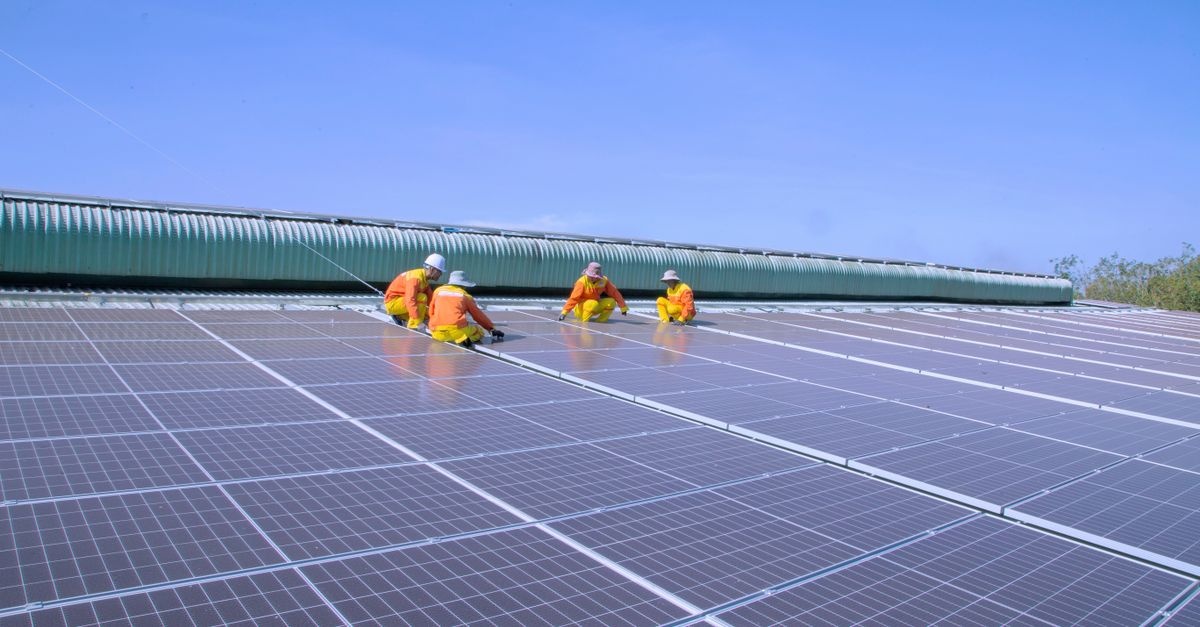
From record-low module prices to smarter inverters and energy storage, solar power is no longer an upstart technology. It is the backbone of new electricity capacity worldwide. As the calendar turns to 2026, solar transitions from rapid growth to strategic maturity—where reliability, grid value, lifecycle impact, and policy alignment matter as much as raw watts. If you are asking yourself, Photovoltaics 2026–what’s new to know, this in-depth guide maps the technologies, incentives, economics, and actions that will define the next wave of deployments for homeowners, businesses, and utilities.
Why 2026 Matters for Solar
Solar is not only cheaper and cleaner; it is getting smarter, safer, and more integrated with the grid. By 2026, the market will be shaped by three intersecting forces: breakthrough module and inverter technologies hitting volume, incentives shifting from pure capacity additions to performance and domestic content, and grid rules favoring flexibility (think batteries, demand response, and virtual power plants). Understanding how these align in your region can translate directly into lower costs, higher returns, and stronger resilience.
- Technology maturity: N-type cells, tandem stacks, bifacial modules, and advanced trackers become mainstream features rather than premium add-ons.
- Grid integration: Energy storage and smart controls unlock value beyond net metering—time-of-use optimization, demand charge reduction, back-up power, and grid services.
- Policy evolution: Incentives favor quality (bankability, durability), locality (domestic content), and equity (low-to-moderate income access, community solar).
- Lifecycle stewardship: Recycling, circular components, and warranties aligned with realistic degradation rates become procurement essentials.
In short, Photovoltaics 2026–what’s new to know is less about a single headline innovation, and more about a synchronized ecosystem that delivers measurable value over decades.
Breakthroughs in PV Technology You Will Actually See in 2026
Solar cell labs grab attention, but what really matters is what ships, gets installed, and performs in the field. Here are the advances most likely to impact real-world projects in 2026.
N-Type Technologies: TOPCon, HJT, and Beyond
N-type cells (as opposed to older P-type) are now the default for many top manufacturers due to higher efficiencies and better temperature performance. Expect TOPCon and Heterojunction (HJT) to dominate rooftops and utility fields.
- Higher efficiency: Typical commercial modules around 21–23% module efficiency, with incremental gains narrowing the gap between lab and field.
- Better in heat: Improved temperature coefficients deliver more energy on hot roofs and in arid climates.
- Lower degradation risk: N-type architectures mitigate issues like light-induced degradation that historically affected some P-type designs.
For any buyer asking Photovoltaics 2026–what’s new to know, one answer is that N-type has become a sensible baseline rather than a premium experiment.
Perovskite-Silicon Tandems Move Closer to Market
Perovskite-silicon tandem cells stack two absorbers tuned to different parts of the spectrum, pushing efficiency beyond what single-junction silicon can practically achieve. By 2026, expect early commercial tandems in niche or premium segments, with mainstream adoption following as stability and mass manufacturing scale improve.
- Efficiency upside: Tandems target higher module efficiencies, translating to smaller footprints, lower balance-of-system costs, and better performance in space-constrained sites.
- Manufacturing reality: Encapsulation, moisture barriers, and defect control are the gating factors for scaling.
- Use case fit: High-value rooftops, BIPV, and performance-driven C&I projects are early candidates.
The punchline for Photovoltaics 2026–what’s new to know: watch for carefully specified, bankable tandem offerings from established manufacturers before betting entire portfolios on the newest entrants.
Bifacial Modules + Trackers Become the Utility-Scale Default
Bifacial modules harvest light from the front and back; single-axis trackers follow the sun to maximize daily production. The combination has already reshaped utility-scale economics and will continue into 2026 with smarter algorithms, lighter designs, and better soiling management.
- Yield gains: Backside gains from 5–15% depending on albedo, row spacing, and height.
- Smarter tracking: Predictive controls that incorporate weather, grid prices, and clipping limits to boost net revenue.
- Design nuance: Ground cover, vegetation management, and snow strategies matter more with bifacial systems.
Back-Contact and Multi-Busbar Improvements
Shingled and back-contact cells reduce shading and resistive losses. Combined with multi-busbar and optimized interconnects, they cut mismatch and boost field yield. For residential and commercial rooftops, these designs also improve aesthetics—an underrated driver of adoption in premium markets.
Module Toughness: Glass, Frames, and Wind/Snow Ratings
Extreme weather has refocused buyers on mechanical load ratings, hail resistance, and mounting details. In 2026, spec sheets increasingly feature enhanced glass thickness, better cell spacing for hail resilience, and clearer wind tunnel test disclosures.
- Hail and wind: Regions with frequent hailstorms or hurricanes are normalizing hardened module SKUs and reinforced racking.
- Warranty realism: Degradation guarantees aligned with n-type durability and clear exclusions for extreme events.
MLPE and Inverter Intelligence
Module-level power electronics (MLPE)—microinverters and DC optimizers—continue to evolve with better thermal design, faster shutdown, and tighter integration with batteries. In 2026, expect the following shifts:
- Grid support: Volt/VAR, frequency ride-through, and export control become standard features, not custom firmware.
- Safety: Rapid shutdown compliance and arc-fault detection are table stakes for rooftops.
- Fleet analytics: Cloud-based diagnostics that flag impending failures before yield is lost.
If you are cataloging Photovoltaics 2026–what’s new to know, put inverter analytics and remote O&M high on your list; they materially reduce lifetime costs.
Storage and Flexibility: The 2026 Advantage
Storage is fast becoming the difference between solar that merely reduces bills and solar that unlocks grid value. By 2026, batteries, smart loads, and tariff-aware controls will be common companions to new PV.
LFP Today, Sodium-Ion Rising, Solid-State on the Horizon
- LFP (Lithium Iron Phosphate): The workhorse for residential and C&I due to safety, cycle life, and stable supply chains. Expect improved energy density and better low-temperature performance.
- Sodium-ion: Attractive for cost-sensitive, moderate-energy applications, with performance improving as manufacturing matures. Watch pilots in distributed storage and behind-the-meter systems.
- Solid-state: Significant R&D momentum continues, but mainstream deployments will trail after 2026 as manufacturability and cost targets are proven.
Tariff-Savvy Controls and Virtual Power Plants (VPPs)
New rate designs reward flexible consumption and export. Smart inverters and home energy management systems schedule charging/discharging to capture time-of-use spreads, reduce demand charges, and participate in VPPs where allowed.
- Behind-the-meter value: Bill savings from peak shaving, self-consumption, and demand response stacking with solar incentives.
- Grid revenue: Markets are opening to aggregated DERs for capacity, frequency response, and contingency reserves.
- Resilience: Islanding and backup become design norms, with critical loads panels and standardized commissioning.
For Photovoltaics 2026–what’s new to know, the answer is simple: storage is less an add-on and more a co-equal pillar of project value.
Incentives, Policies, and Market Rules to Watch in 2026
Policies determine when and where projects are bankable. While specific details vary by jurisdiction and may evolve, several global patterns will influence 2026 decisions.
United States: IRA Era Matures
The Inflation Reduction Act (IRA) reshaped U.S. solar economics with long-duration tax credits, adders, and project financing innovations. By 2026, three dynamics are particularly influential:
- Investment Tax Credit (ITC) and Production Tax Credit (PTC): Technology-neutral credits support solar, storage, and hybrids. Storage ITC without solar pairing opens retrofits and standalone batteries.
- Adders: Potential bonuses for domestic content, energy communities, and low-to-moderate-income deployments can materially improve project returns.
- Transferability: The ability to transfer tax credits fuels more flexible deal structures and faster closings for developers and C&I buyers.
Net metering continues to evolve. States are shifting toward export compensation tied to grid value (e.g., time-of-day rates), making batteries and load controls more valuable. Community solar expansions and multi-tenant solutions (virtual net metering) are expected to grow participation.
European Union: Speed, Simplicity, and System Value
EU policy focuses on accelerated permitting, high renewables targets, and grid modernization. By 2026, expect continued emphasis on simplifying rooftop approvals, expanding community energy, and designing markets that reward flexibility.
- Permitting and interconnection: One-stop shops, fast-track rooftop rules, and standardized technical requirements reduce soft costs.
- Corporate PPAs: A robust corporate PPA market helps businesses hedge energy costs and meet ESG goals.
- Flexibility markets: Demand response and storage participation broaden, creating new revenue streams for solar-plus-storage.
Asia-Pacific: Scale, Manufacturing, and Distributed Growth
Asia’s solar landscape blends vast utility-scale projects with energized rooftop markets. Manufacturing investments shape pricing and availability, while national and state incentives continue to evolve.
- China: Continuous capacity additions influence global module pricing and technology diffusion.
- India: Rooftop programs, domestic manufacturing drives, and utility procurement continue to expand solar’s footprint.
- Australia: Distributed PV with batteries and VPPs grows under time-of-use pricing and modest export compensation.
In every region, the 2026 story aligns: incentives increasingly favor quality deployment, grid value, and inclusion—an essential lens for Photovoltaics 2026–what’s new to know.
Costs, Prices, and LCOE: What 2026 Buyers Should Expect
Solar costs have fallen dramatically, but 2026 economics are about more than module price tags. Think total system value: initial capital, soft costs, financing terms, operating expenses, degradation, and revenue flexibility.
Module Pricing and Supply Chains
From 2023 onward, manufacturing expansions and competitive dynamics pushed module pricing down. By 2026, modules may represent a smaller share of total project cost for rooftops, while soft costs (labor, permitting, interconnection) loom larger. In utility-scale, engineering and grid interconnection timelines dominate project economics.
- Choose bankability over the lowest bid: Proven manufacturers with transparent quality control, performance data, and recycling pathways often reduce lifetime risk.
- Mind the BOS: Higher-efficiency modules and optimized string designs can reduce racking, cabling, and labor.
LCOE and Payback: The Real-World View
Levelized cost of energy is a helpful benchmark, but your tariff, load profile, and policy stack determine outcomes. In 2026, expect:
- Residential: Paybacks ranging broadly depending on local rates and incentives; batteries improve economics where export credits are lower or outages are common.
- C&I: Demand charge reduction and time-of-use optimization can yield strong returns; operational coordination is key.
- Utility-scale: Hybrid solar-plus-storage bids continue to win procurement due to dispatchability and grid support value.
If you are weighing Photovoltaics 2026–what’s new to know for ROI, remember that tariff-aware control software can be as valuable as higher module efficiency.
Designing for Reliability, O&M, and Circularity
Solar systems must thrive for 25–35 years. By 2026, best practice emphasizes durability, predictive maintenance, and end-of-life planning from day one.
Reliability Priorities
- Degradation realism: Align performance models with conservative degradation assumptions, especially in high-irradiance or high-heat locales.
- Inverter strategy: Consider redundancy and hot-swap approaches; choose vendors with strong service networks and spare parts programs.
- Weather hardening: Region-specific racking and mounting, cable management, and drainage reduce storm and soiling damage.
O&M 2.0: Data and Drones
In 2026, O&M is proactive: aerial thermography, machine learning fault detection, and integrated monitoring portals reduce truck rolls and downtime.
- Condition-based maintenance: Service when metrics indicate, not just on calendar intervals.
- Component telemetry: String- and module-level data isolates issues quickly for targeted fixes.
- Documentation discipline: Version-controlled as-builts, commissioning reports, and warranty records accelerate claims and repairs.
Recycling and Circular Supply
Module recycling capacity is scaling, and extended producer responsibility frameworks are expanding. For procurement in 2026:
- Ask for take-back programs: Prefer vendors with defined end-of-life pathways.
- Track material disclosures: Glass, aluminum, silicon, and copper recovery improve project sustainability metrics.
- Design for disassembly: Hardware choices that simplify removal and sorting reduce eventual recycling costs.
Design Trends Shaping Sites in 2026
Beyond modules and inverters, site-specific design choices drive yield, acceptance, and co-benefits.
Agrivoltaics and Dual Land Use
Combining solar with grazing, cropping, or pollinator habitats is moving from pilot to practice. Elevated racking, row spacing, and vegetation plans are tuned for agricultural productivity and ecosystem services, improving community support and permitting success.
BIPV and Aesthetic Solar
Building-integrated photovoltaics (BIPV)—façade glass, solar shingles, and cladding—gain traction where appearance and limited roof space are constraints. Expect careful vetting of warranties, fire ratings, and thermal performance.
Floating Solar (FPV) and Reservoirs
Where land is scarce and evaporation is a concern, floating solar grows. Anchoring, corrosion resistance, and operations on water demand specialized expertise. FPV often pairs with hydropower for grid benefits.
EV Integration and Bidirectional Power
EV charging at homes and workplaces aligns naturally with solar generation. Bidirectional charging (V2H or V2G where permitted) turns EVs into flexible storage, especially during peak prices or outages.
Market Segments: Residential, C&I, and Utility in 2026
Each segment faces unique constraints and opportunities. Understanding these helps tailor your 2026 playbook.
Residential
- Value stack: Self-consumption, time-of-use arbitrage, and resilience. Smart panels and load controls magnify solar+storage benefits.
- Sales evolution: Education-centric journeys outperform pushy tactics; homeowners want transparent modeling and clear warranty paths.
- Photovoltaics 2026–what’s new to know for homes: Expect more battery-ready inverters, standardized rapid shutdown, and utility programs that pay for flexibility.
Commercial and Industrial (C&I)
- Demand charges and TOU: Storage and load management are crucial for economics.
- Onsite vs. offsite: Rooftop or carport systems can pair with offsite PPAs to meet 24/7 or annual targets.
- Procurement best practice: Technology-agnostic RFPs, performance guarantees, and O&M SLAs ensure lifecycle value.
Utility-Scale
- Hybrid dominance: Solar-plus-storage increasingly wins due to dispatchability and grid support services.
- Interconnection queues: Early grid studies and flexible design (e.g., DC-coupled vs. AC-coupled) protect timelines.
- Environmental stewardship: Wildlife corridors, pollinator habitats, and community benefit agreements improve project acceptance.
Financing and Business Models That Work in 2026
Financing has diversified beyond cash and simple loans. By 2026, you can mix structures to fit balance sheets, tax capacity, and risk preferences.
Options Across Segments
- Cash and loans: Competitive rates with green loan products; ownership retains tax and depreciation benefits where applicable.
- Leases and PPAs: Off-balance-sheet options for predictable energy costs; useful for organizations with limited tax appetite.
- Credit transfer and adders: In the U.S., transferable tax credits simplify capital stacks; adders for domestic content or community benefits can tip projects into viability.
Key Due Diligence Points
- Counterparty strength: PPA offtaker creditworthiness and developer track record matter.
- Performance guarantees: Align on production guarantees, O&M scope, and remedy mechanisms.
- Securitization data: For portfolios, granular performance data reduces financing costs.
From Idea to Interconnection: A 2026 Readiness Checklist
Whether you are planning a home array or a multi-megawatt site, the sequence below helps you move decisively and avoid rework.
1) Define Objectives
- Primary goals: Bill savings, sustainability targets, resilience, or revenue from grid services.
- Constraints: Roof space, land use, aesthetic requirements, and operations.
2) Analyze Load and Tariffs
- Interval data: Gather at least 12 months of hour-level usage if possible.
- Tariff scan: Identify time-of-use windows, demand charges, and export credit rules.
3) Model PV + Storage
- System sizing: Consider DC-to-AC ratio, panel orientation, shading, and storage capacity for your tariff.
- Controls: Define dispatch logic: self-consumption first, bill optimization, or grid services participation.
4) Evaluate Technology and Vendors
- Module choice: N-type as a baseline; assess bifacial viability; consider tandem offerings from established brands.
- Inverters/MLPE: Ensure compliance with local grid codes, rapid shutdown, and remote firmware updates.
- Racking and mounting: Engineer for wind, snow, and hail in your region; verify third-party test data.
5) Validate Incentives and Interconnection
- Eligibility: Confirm tax credits, rebates, and any adders; check domestic content or LMI criteria where relevant.
- Grid queue: Start interconnection early; iterative designs reduce surprises during utility review.
6) Close Financing and Contracts
- Deal structure: Cash, loan, lease, or PPA; compare net present value under your load and tariff.
- Performance terms: Production guarantees, availability targets, and O&M SLAs aligned with your risk tolerance.
7) Build, Commission, and Monitor
- Quality control: Pre- and post-install inspections; IR scans; torque checks; labeling.
- Commissioning: Verify inverter settings, shutdown procedures, and monitoring dashboards.
- Analytics: Set alerts for underperformance and define escalation paths with your O&M provider.
What’s New to Know: Fast Answers for 2026
If your core question is Photovoltaics 2026–what’s new to know, here are the bite-size takeaways:
- N-type is normal: TOPCon and HJT are now common, delivering better heat performance and steady yields.
- Tandems are real—but selective: Expect early commercial products from bankable players; vet warranties and stability data.
- Storage is strategy: Time-of-use rates and evolving export compensation make batteries central to project value.
- Incentives reward quality and inclusion: Domestic content and community-driven adders can move the needle.
- Grid services pay: VPPs, demand response, and export controls turn PV into a flexible asset, not just a generator.
- Resilience matters: Design for outages with critical loads and verified islanding.
- Lifecycle wins: O&M analytics and recycling pathways lower long-run risk and improve ESG performance.
Frequently Asked Questions for 2026
Will perovskite-silicon tandems be mainstream by 2026?
Early commercial tandems are likely to appear in 2026, especially in premium or space-limited applications. Mainstream adoption will track proven stability, large-scale manufacturing, and bankable warranties. For large portfolios, pilot before scaling.
Is rooftop solar still worth it if net metering is reduced?
Yes, particularly when paired with storage and smart controls. Time-of-use optimization, demand charge reduction, and targeted export can maintain strong economics. Modeling your tariff and load profile is essential.
How do I compare module options in 2026?
Look beyond nameplate watts. Compare temperature coefficients, bifacial gains (if applicable), mechanical load ratings, verified third-party performance data, and warranty terms. Consider end-of-life take-back programs and recycling options.
What about battery safety and lifespan?
LFP chemistries provide robust thermal stability and long cycle life for residential and C&I systems. Ensure proper installation, ventilation, and commissioning; adhere to manufacturer and code requirements. Evaluate warranty depth (cycles, throughput, and calendar years).
How do incentives change my payback?
Incentives can shorten paybacks significantly, but rules vary by region and may evolve. Confirm eligibility, stack adders where available, and align your project timeline with application windows and interconnection milestones.
A Practical 2026 Buyer’s Guide
Use this condensed set of actions as you finalize choices in 2026.
- Get two or three bids: Standardize assumptions for apples-to-apples comparisons, including storage sizing and control strategies.
- Check financial modeling: Ensure proposals model your actual tariff, export credits, and seasonal load patterns.
- Verify equipment lineage: Prefer vendors with multi-year field data, transparent quality control, and reliable support.
- Plan for the grid you have: Align export controls, interconnection rules, and utility programs before final design.
- Design for the grid you want: Include provisions for future batteries, EV charging, or VPP participation even if you install in stages.
- Codify O&M: Define maintenance rhythms, monitoring alerts, and response SLAs at contract signing.
Looking Past 2026: The Trajectory
By 2026, solar’s center of gravity shifts from expansion at any cost to quality growth that is integrated, reliable, and circular. Efficiency breakthroughs like tandems will roll into mainstream products as durability and bankability prove out. Storage will be the norm, not the exception. And incentives will increasingly reward projects that support the grid, serve communities, and plan responsibly for end-of-life. If you have been asking Photovoltaics 2026–what’s new to know, the most important insight is this: successful solar in 2026 is a system, not a component, and its greatest strengths emerge when technology, policy, and operations are designed together.
Conclusion: Make Your 2026 Plan
Solar’s 2026 landscape is rich with opportunity for homeowners, facility managers, developers, and investors. The smartest strategies balance proven technology with near-term innovations, pair PV with storage and intelligent controls, and leverage incentives that reward flexibility and quality. Start with clear objectives, model your tariff reality, and choose partners committed to performance over decades.
As you move from research to action, keep this in mind: Photovoltaics 2026–what’s new to know is not a moving target—it is a roadmap. Follow it, and your project will deliver cleaner power, stronger finances, and greater resilience for years to come.